Escaping ‘Plastic Purgatory’
If you’re a parent in 2026, you know the feeling of looking at a toy box and seeing a graveyard of primary-colored plastic. Most of those toys will last 500 years on a planet your child will inherit. It’s a paradox that has finally reached a breaking point. Sustainable parenting isn’t about deprivation; it’s about shifting the definition of ‘play’ from ‘disposable’ to ‘circular.’
The PHA Breakthrough: Plastic that actually disappears
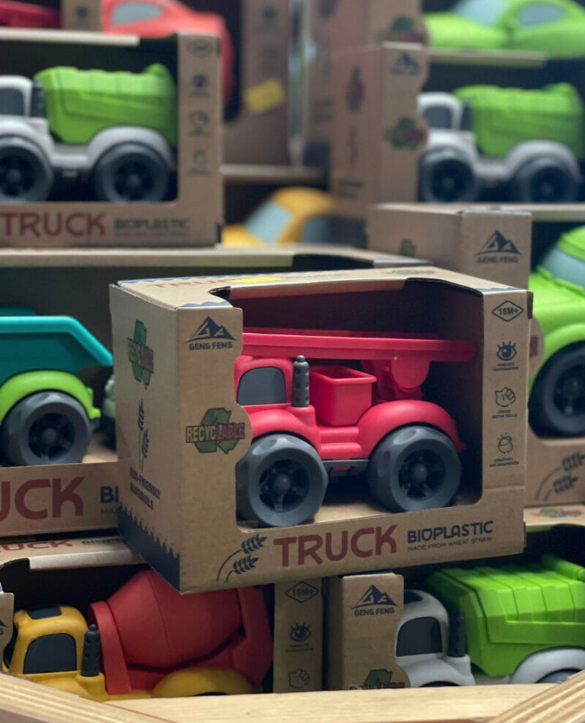
For years, ‘eco-friendly’ plastic was mostly marketing. But in 2026, the industry has shifted to **PHA (Polyhydroxyalkanoate)**. This isn’t just ‘recyclable’; it’s truly bio-assimilable. If a PHA toy ends up in the ocean or a compost bin, it breaks down into water and CO2 within months, leaving zero microplastics behind.
When you’re shopping this year, look for the ‘Marine Biodegradable’ seal. Brands like **BioPlay** are now producing construction blocks that feel exactly like the leading brands but are made from fermented plant sugars. This is the ‘insider’ tip: stop looking for ‘recycled’ plastic (which can still contain toxins from its previous life) and start looking for ‘bio-based’ polymers.
The ‘Open-Ended’ Philosophy: Buying Less, Playing More
The most sustainable toy is the one that stays relevant for five years instead of five weeks. In 2026, we’re seeing a massive return to **Open-Ended Play.** This means toys that don’t have a single ‘correct’ way to use them.
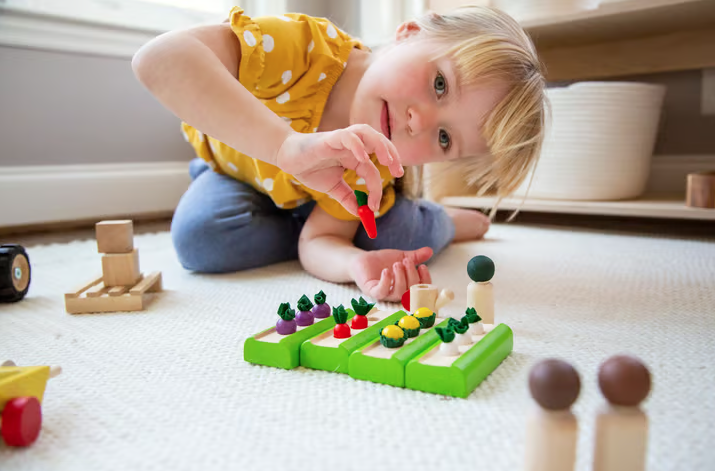
A set of high-quality, FSC-certified wooden arches can be a tunnel for cars, a cradle for a doll, or a bridge for a dinosaur. Because these toys don’t have batteries or ‘gimmicks,’ they force the child to provide the ‘software’ (their imagination). It’s better for their brain development and better for the planet. The ‘unspoken rule’ of 2026 nurseries? If a toy only does one thing, it doesn’t belong in the house.
The Rise of the ‘Toy Library’
In 2026, ‘ownership’ is becoming a secondary concept for many eco-conscious parents. Subscription services like **TinyEarth** allow you to rent a set of high-end, sustainable toys for three months. When your child reaches a new developmental milestone, you ship them back and receive a new curated set.
This ‘Circular Toy Economy’ reduces household clutter and ensures that high-quality toys are used by ten families instead of sitting in one closet. It’s the ultimate hack for parents who want the best for their kids without the environmental guilt (or the $1,000 price tag).
Summary: The Legacy of Play
Your child’s first lessons about the world come from the objects they touch. By choosing toys made from cork, bamboo, or PHA, you’re teaching them that we respect the materials we use. In 2026, a ‘cool’ toy isn’t the loudest one on the shelf—it’s the one that leaves the smallest footprint.