Screen Time Without the Guilt: The Best 2026 Apps for Preschoolers
If you’re a parent in 2026, you’re exhausted by the ‘Screen Time Debate.’ One expert tells you that an iPad will rot your child’s brain, and another tells you that if your kid isn’t coding by age four, they’ll be left behind in the AI economy. It’s enough to make you want to throw every device in the trash and move to a farm.
But let’s be real: screens are part of our world. The goal isn’t to ban them; it’s to make sure that when your preschooler *is* on a device, they aren’t just watching ‘unboxing’ videos of plastic toys. They should be engaging, thinking, and creating.
In 2026, the best apps have moved away from ‘passive consumption’ and toward ‘Interactive Mentorship.’ Here are the ones actually worth the storage space.
The AI Tutor: Khan Academy Kids (2026 Edition)
Khan Academy has been the gold standard for a long time, but their 2026 update is something else entirely. They’ve integrated a ‘Safe-AI’ guide—a cute, animated character that actually *listens* to your child. If your kid is struggling with a logic puzzle, the app doesn’t just show the answer. It asks questions. ‘What do you think happens if we move this block here?’
It’s scaffolding. It’s teaching them *how* to think, not *what* to think. And because it adapts in real-time to their level, they never get bored and they never get frustrated. It’s the closest thing we have to a private tutor for the price of… well, zero. It’s still free, and it’s still the best thing on the App Store.

Creative Play: Toca Boca World (The ‘Creator’ Update)
Toca Boca has always understood that kids love ‘open-ended’ play. There are no points. No timers. No ‘Game Over’ screens. In 2026, they’ve added a ‘Story Recording’ feature. Your child can move characters around a digital house, record their own voice, and ‘direct’ their own little movies.
This is huge for language development. They aren’t just playing a game; they are storytelling. They are practicing narrative structure. I’ve watched my own kid spend an hour ‘narrating’ a dinner party between a sloth and a robot. It’s hilarious, but more importantly, it’s active creativity. It’s using the tablet as a digital puppet theater rather than a mindless television.
The ‘Real World’ Bridge: Pok Pok Playroom
If you want an app that feels ‘handmade’ and quiet, **Pok Pok** is the winner. It looks like a beautiful wooden toy set. There’s no loud music, no bright flashing lights, and no ‘prizes.’ It’s all about physics and cause-and-effect. You flip switches, you move gears, you listen to the ‘clack’ of digital wood.
It’s a ‘calm’ app. In a world of ‘over-stimulation,’ Pok Pok is the digital equivalent of a quiet corner with a box of blocks. It encourages curiosity without the dopamine-spike addiction that ruins so many other apps.
The 2026 Rule: Co-Play is the Key
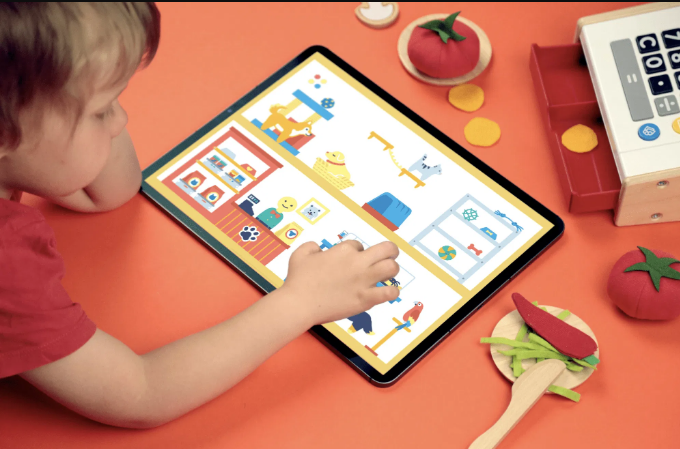
Here is the secret that no app developer will tell you: no app is a replacement for you. The ‘Best’ way to use these tools in 2026 is ‘Co-Playing.’ Sit with them for ten minutes. Ask them why they chose that color. Let them show you the ‘movie’ they made. When you bridge the gap between their digital world and your physical presence, the guilt of ‘screen time’ disappears. It’s just another tool for connection. So, take a breath. You’re doing a great job. And if an app gives you twenty minutes of peace to drink a hot coffee? That’s an educational win for the whole family.