The ‘Privacy-First’ Security Landscape of 2026
Home security has undergone a radical shift in 2026. We have moved away from ‘Cloud-Dependent’ systems (like the early versions of Ring or Nest) toward **’Edge-Computing’ Sovereignty.** In a world where data privacy is the primary concern, homeowners in 2026 want security that stays *inside* their walls.
The best systems this year don’t send your video to a server in Virginia; they process everything on a local ‘Home-Hub’ using **On-Device AI.** This ensures your privacy while providing faster-than-light response times. Here is the 2026 guide to the ‘Big Three’ architectures dominating the market.
1. The ‘Matter’ Standard: Universal Harmony
In 2026, the first thing you must look for is **Matter 3.0 Compatibility.** Matter is the ‘Universal Language’ that allows a Samsung sensor to talk to an Apple HomePod and a Google Lock.
Gone are the days of having six different apps. A Matter-certified system ensures that your security ‘Mesh’ is unbreakable. If your Wi-Fi goes down, Matter-enabled devices use **’Thread’ Networking**—a low-power, self-healing radio frequency that keeps your sensors communicating even during a blackout. In 2026, a security system that isn’t Matter-compatible is effectively a ‘legacy’ paperweight. This interoperability is the backbone of the ‘Smart Fortress.’
2. Local AI Facial and ‘Behavioral’ Recognition
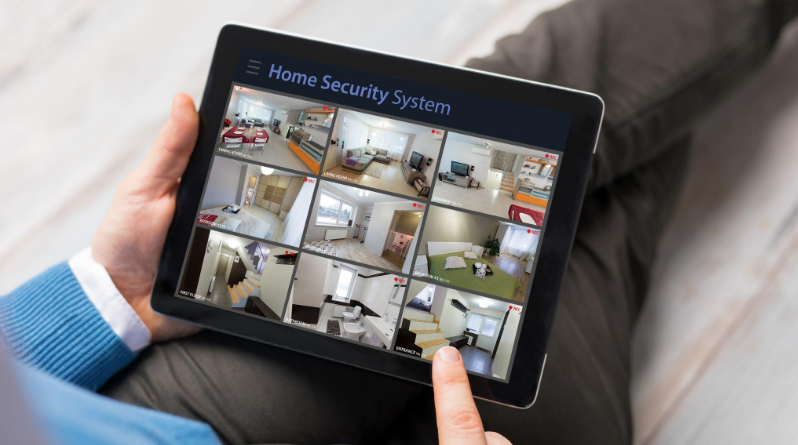
Standard ‘Motion Alerts’ are a relic of the past. In 2026, we use **’Behavioral Analytics.’** The best systems (like the **Eufy-Elite 2026**) can distinguish between a ‘Package Delivery,’ a ‘Known Family Member,’ and ‘Erratic Behavior’ (like someone lingering by a window for more than 45 seconds).
Because this processing happens on the local hub, the alert is sent to your phone in under 0.5 seconds. The ‘insider’ feature to look for in 2026 is **’Pet-Exclusion Logic.’** This uses the AI to ignore the 3 AM ‘zoomies’ of your cat while still staying alert for human-sized heat signatures. It’s security that is ‘Smart’ enough to know the difference between a threat and a roommate.
3. The Rise of ‘Home-Patrol’ Drones
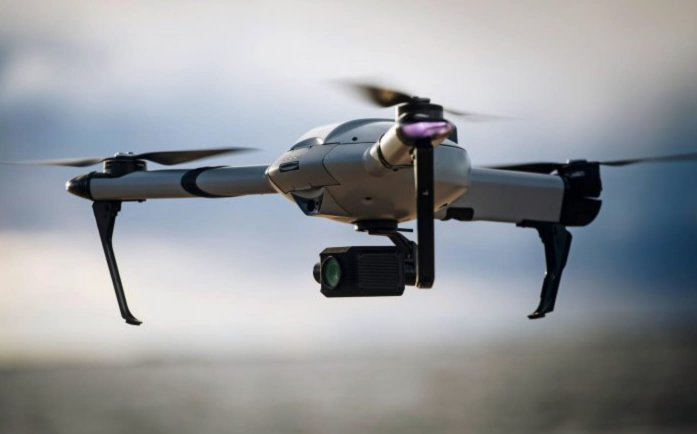
One of the most ‘2026’ features in high-end security is the **Autonomous Indoor Drone.** Systems like the **Amazon-Astro v3** or **Ring Always Home Cam** now feature ‘Collision-Avoidance 2.0.’
If a glass-break sensor is triggered in the kitchen, the drone automatically undocks and flies to the location, sending a live, eye-level feed to your 2026 ‘Smart-Glasses’ or phone. This eliminates ‘Blind Spots’ that fixed cameras can’t see. When the patrol is done, the drone returns to its ‘Stealth Charging Dock’ inside a kitchen cabinet. It’s the ultimate ‘Force Multiplier’ for large homes.
4. Biometric ‘Frictionless’ Entry
Keys are a 20th-century concept. In 2026, the ‘Smart Lock’ has evolved into the **’Biometric Portal.’** The best locks now use **’Palm-Vein Recognition’** or ‘3D-Face ID’ that works even in pitch-black conditions.
Unlike fingerprints, which can be ‘lifted,’ palm-vein patterns are internal and impossible to spoof. Furthermore, these locks are now integrated with your **’Digital Identity Wallet.’** As you approach the door, the ‘Ultra-Wideband’ (UWB) chip in your watch or phone ‘Handshakes’ with the door, unlocking it as you touch the handle. It’s ‘Frictionless’ security—providing the highest level of protection with zero inconvenience.
Summary: The ‘Fortress’ Mindset
Choosing a security system in 2026 is about balancing **Intelligence, Privacy, and Interoperability.** Look for Local AI, Matter compatibility, and Biometric entry. Your home should be a place where technology watches over you, but never ‘watches’ you. By building a system on ‘The Edge,’ you ensure that your safety and your data remain exactly where they belong: with you.