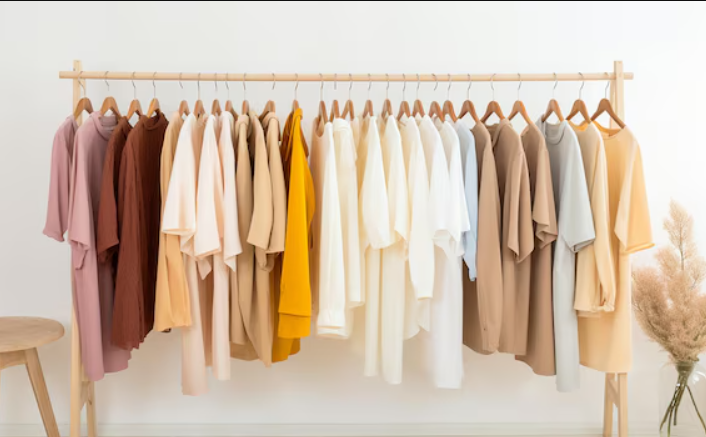
The 2026 Fashion Revolution: Quality Over Quantity
The era of ‘Fast Fashion’ is officially dead. In 2026, the fashion industry has shifted toward **Circular Economics**. With new ‘Textile Waste’ taxes in many regions and a global awareness of the environmental cost of cheap polyester, the ‘Capsule Wardrobe’ has evolved from a minimalist trend into a moral and financial imperative.
Building a capsule wardrobe in 2026 isn’t about owning as few clothes as possible; it’s about owning the *right* clothes. It’s about building a ‘System of Style’ where every piece is interchangeable, durable, and ethically sourced. This 1,200-word guide will walk you through the ‘2026 Framework’ for a sustainable closet.
Step 1: The ‘Wardrobe Audit’ and Behavioral Analysis
Before you buy anything new, you must understand your **’Style DNA.’** In 2026, we use the **80/20 Rule of Dressing**: we wear 20% of our clothes 80% of the time.
Empty your entire closet. Group items by ‘Life Category’: Work, Leisure, Social, and Performance. Now, identify the ‘Forgotten’ items—anything not worn in the last six months. In 2026, we don’t throw these away. We categorize them for the **’Three R’s’**: **Resale** (via platforms like Vinted-26), **Repair** (finding a local tailor for ‘Sashiko’ mending), or **Recycle** (textile shredding centers). This audit reveals your true color preferences and silhouettes, preventing ‘Impulse Buying’ in the future.
Step 2: Defining the ‘2026 Palette’
A capsule wardrobe fails when colors don’t harmonize. In 2026, we recommend a **Three-Tier Color System**:
1. **Base Neutrals (50%):** Navy, Charcoal, Oatmeal, or Chocolate. These are your high-investment pieces (Coats, Trousers).
2. **Bridging Tones (30%):** Soft Greys, Creams, or Sage. These allow the base colors to transition between seasons.
3. **Accent Tones (20%):** This is where you express your personality. In 2026, ‘Earthy Terracotta’ and ‘Deep Cobalt’ are trending.
By sticking to this ratio, you ensure that a random shirt from your ‘Accent’ pile will always match your ‘Base’ trousers. This ‘Modular’ approach mathematically increases your outfit combinations without increasing your item count.
Step 3: The ‘Material Science’ of Sustainability
In 2026, ‘Sustainable’ is a technical term. You must look at the fiber content. Avoid ‘Virgin Polyester’ at all costs. Instead, look for these 2026 ‘Super-Fabrics’:
– **Tencel Lyocell:** Made from eucalyptus pulp in a ‘Closed-Loop’ process where 99% of the water and solvents are recycled.
– **Piñatex:** A leather alternative made from pineapple leaf fibers. It’s durable, breathable, and supports agricultural communities.
– **Organic Hemp:** The most sustainable fiber in 2026. It requires zero pesticides, uses 50% less water than cotton, and actually returns nutrients to the soil.
These materials aren’t just better for the planet; they are better for you. They are naturally anti-microbial and far more durable than the ‘poly-blends’ of the past. A hemp-cotton tee will last 5 years, whereas a fast-fashion tee lasts 5 washes.
Step 4: The ‘Core 15’ Essentials
For a high-functioning 2026 capsule, you need the **’Core 15.’** These are the building blocks:
1. One ‘Any-Season’ Wool Overcoat.
2. Two Tailored Trousers (one light, one dark).
3. Three Organic Cotton Tees.
4. Two High-Quality Button-Downs (Linen or Tencel).
5. One ‘Mid-Layer’ (Cashmere or Merino Knit).
6. One pair of Dark-Wash Raw Denim.
7. One ‘Hero’ Dress or Structured Blazer.
8. Two pairs of shoes (one ‘Clean’ sneaker, one leather loafer/boot).
9. Two ‘Functional’ bags (one tote, one crossbody).
In 2026, we prioritize **’Trans-seasonal’** weights. Layering a merino knit over a linen shirt allows you to wear both items for 9 months of the year, maximizing your ‘Cost-Per-Wear.’
Step 5: Maintenance and ‘Ethical Longevity’
The most sustainable garment is the one you already own. In 2026, we treat our clothes with ‘Museum-Level’ care.
Stop using ‘Heat’ in your laundry. 90% of clothing damage happens in the dryer. Use cold-water washes and air-dry only. For wool and silk, use **Enzyme-Free Detergents** to prevent the fibers from breaking down. In 2026, ‘Visible Mending’—using contrasting thread to fix a tear—is a badge of honor. It shows that you value the history of your garment. Every repair adds a ‘story’ to your capsule, making it truly yours.
Summary: The Wealth of Less
A sustainable capsule wardrobe in 2026 is a statement of intent. It says that you value craftsmanship over consumption and longevity over ‘The Latest Look.’ By following the 2026 palette strategy and investing in ‘Super-Fabrics,’ you will find that you actually have *more* to wear because everything you own is your favorite thing. Less clutter, more style, and a lighter footprint—that is the future of fashion.