The ‘Analog’ Advantage: Why 2026 Kids Need to Unplug
In a world of 2026 ‘Meta-Learning’ and ‘AI-Tutors,’ the greatest gift we can give a child is **Boredom**. Real, unplugged boredom is the ‘Fertilizer’ for creativity. When a screen is removed, the brain shifts from ‘Passive Consumption’ to ‘Active Construction.’ In 2026, we call this **’Neuro-Engagement.’** This 1,200-word guide explores the three pillars of screen-free childhood: Tactile Art, Cognitive Puzzles, and the ‘1,000 Hours Outside’ movement.
1. Drawing: The ‘Fine-Motor’ Calibration
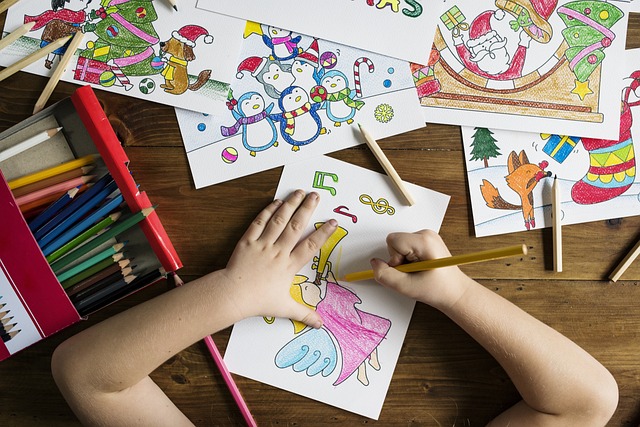
In 2026, as typing and voice-commands dominate, **Handwriting and Drawing** have become ‘Elite Skills.’ Drawing isn’t just about making a pretty picture; it’s about **Hand-Eye Coordination** and **Spatial Reasoning**.
**The 2026 Setup:** Move away from ‘coloring books’ and toward ‘Open-Ended Prompts.’ Give a child a ‘Visual Diary’ and high-quality beeswax crayons or watercolor pencils. In 2026, we use **’Observational Drawing’**—asking a child to draw a leaf or a toy in detail. This builds ‘Visual Literacy’ and teaches them how to *really* look at the world, a skill often lost in the 15-second scroll of digital life.
2. Puzzles and ‘Tactile Engineering’
Puzzles in 2026 have evolved into **3D Engineering Kits.** While a 1,000-piece jigsaw is great for ‘Pattern Recognition,’ the 2026 trend is toward **Mechanical Wooden Puzzles**. These kits allow kids to build working clocks, marble runs, or kinetic sculptures.
**The ‘Flow State’:** Puzzles are one of the few activities that naturally induce a ‘Flow State’ in children. This is the state of ‘Deep Work’ where time disappears. By encouraging puzzles, you are training your child’s **Prefrontal Cortex** to focus for long periods—the ultimate competitive advantage in the 2026 attention economy.
3. Outdoor Play: The ‘1,000 Hours’ Challenge
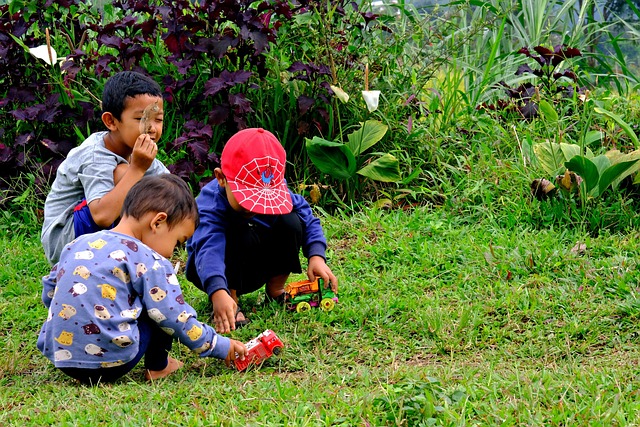
The **’1,000 Hours Outside’** movement has reached its peak in 2026. The goal is simple: spend more time outside than in front of a screen.
**Why it Matters:** Sunlight is essential for **Vitamin D synthesis** and **Myopia Prevention** (nearsightedness), which has skyrocketed in the digital age. But beyond health, the outdoors is the ‘Ultimate Playground.’
– **Loose Parts Play:** Instead of ‘Fixed’ playgrounds, 2026 parents are seeking out ‘Nature Play’ where kids use sticks, mud, and rocks to build. This is ‘Variable Play,’ where the environment changes, forcing the child to ‘Problem Solve’ in real-time.
– **The ‘Risk’ Element:** 2026 child psychology emphasizes ‘Risky Play’ (climbing trees, balancing on logs). This builds **Self-Regulation** and an accurate ‘Internal Compass’ for safety.
4. The ‘Maker’ Station: DIY Crafting
Instead of buying a new toy, in 2026 we build one. A ‘Maker Station’ is a designated box filled with ‘Clean Trash’: toilet paper rolls, cardboard, string, and masking tape.
**The 2026 Skill:** This is **Resourcefulness**. When a child has to figure out how to make a ‘Spaceship’ out of a cereal box, they are practicing ‘Lateral Thinking.’ In 2026, ‘Creativity’ is the one human skill that AI cannot replicate; the ‘Maker Station’ is where that skill is forged.
5. Reading: The ‘Silent Movie’ of the Mind
Reading a physical book in 2026 is a ‘Sensory Ritual.’ The smell of the paper, the weight of the book, and the act of turning pages provide ‘Tactile Feedback’ that an E-reader cannot.
**Parent Tip:** Use the **’Read-Aloud’** method even for kids who can read themselves. It builds vocabulary and provides a ‘Co-Regulation’ moment. In 2026, ‘Graphic Novels’ are a great ‘Bridge’ for kids who are used to high-visual digital content, as they combine complex narrative with visual cues.
Summary: Building a Resilient Brain
Screen-free hobbies in 2026 aren’t ‘Anti-Tech’; they are **Pro-Human.** By diversifying a child’s activities with drawing, puzzles, and nature, you are ensuring they develop a ‘Wide-Band’ intelligence. You are giving them the tools to be creators, thinkers, and explorers in a world that is increasingly trying to turn them into ‘Users.’ Put the tablet away, open the door, and let the real world begin.