Biophilic Design: Healing Your Soul in a Small 2026 Apartment
We’ve all felt it—that ‘boxed-in’ feeling. You’ve been in your 500-square-foot apartment for three days, and the walls feel like they’re slowly moving toward the center of the room. In 2026, as urban living becomes denser and more ‘efficient,’ our mental health is paying the price. We aren’t designed to live in white drywall boxes. We are a biological species that spent 99% of its history in the wild.
This is where **Biophilic Design** comes in. It’s not just about ‘putting a plant in the corner.’ It’s about a fundamental shift in how we design our small spaces to reconnect with nature. In 2026, biophilia is no longer a luxury trend; it’s a ‘Standard of Care’ for anyone living in a city. Here is how you bring the forest into your ‘shoe-box’ apartment.
1. The ‘Fractal’ Principle: Visual Complexity
Nature isn’t flat. A leaf isn’t just a green triangle; it’s a complex, repeating pattern of veins and edges. Our brains love this. It’s called ‘Fractal Geometry.’ When we look at these patterns, our stress levels (cortisol) actually drop.
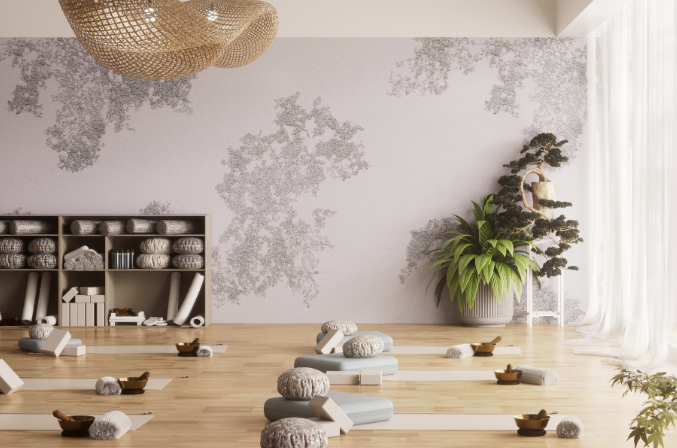
In a small apartment, you can’t have a whole forest, but you can have **Fractal Textures**. Instead of a flat, white rug, get one with a high-low pile that mimics the texture of moss. Instead of a smooth glass coffee table, look for a piece of reclaimed ‘Live Edge’ wood where the natural grain is visible. This ‘Visual Richness’ tricks your brain into thinking the space is more ‘open’ and ‘alive’ than it actually is. It breaks the ‘sterile’ feeling of a modern apartment and gives your eyes a place to ‘wander.’
2. Dynamic Light: The Rhythm of the Sun
One of the biggest issues with small apartments in 2026 is ‘Static Lighting.’ You have one overhead light that’s always the same brightness. This disconnects you from the natural world.
Biophilic design in 2026 focuses on **’Circadian Lighting.’** You use smart bulbs that mimic the color and intensity of the sun throughout the day. But you also use ‘Shadow Play.’ In nature, light is filtered through leaves, creating moving shadows. You can recreate this by placing a large, leafy plant (like a Fiddle Leaf Fig or a Monstera) in front of a window or a spotlight. The way the shadows move across your floor during the day provides a ‘sense of time’ that a white wall never can. It’s a subtle, psychological reminder that you are part of a moving, breathing world.
3. The ‘Acoustic Oasis’: Natural Soundscapes
We think of design as something we see, but in 2026, it’s also something we hear. City apartments are filled with ‘Mechanical Noise’—the hum of the fridge, the traffic outside, the muffled voices of neighbors. This creates a constant, low-level ‘threat’ response in our brains.
To counter this, add a **Vertical Water Feature**. I’m not talking about a cheesy plastic fountain. In 2026, we have sleek, wall-mounted slate waterfalls that take up zero floor space. The sound of running water is a ‘Natural White Noise’ that masks the city sounds and signals ‘safety’ to our primitive brains. Pair this with a hidden ‘Nature Speaker’ that plays a low-volume loop of birdsong or forest wind, and your apartment suddenly feels like a sanctuary rather than a cell.
4. Material Honesty: Touch the Earth
Look around your room. How much of it is plastic, laminate, or ‘faux’ something? In 2026, we are craving **Material Honesty**. If it looks like wood, it should *be* wood. If it looks like stone, it should be cold to the touch.
In a small space, you can’t afford big pieces, so focus on the ‘Touch Points.’ The door handles, the light switches, the coasters, the throw pillows. Replace plastic with brass, wool, linen, and cork. These ‘Natural Materials’ develop a patina over time—they ‘age’ just like we do. This connection to the ‘passage of time’ is a key part of biophilia. It makes your space feel grounded and real in a world that feels increasingly ‘disposable.’
5. The ‘Indoor Jungle’ (The 2026 Standard)
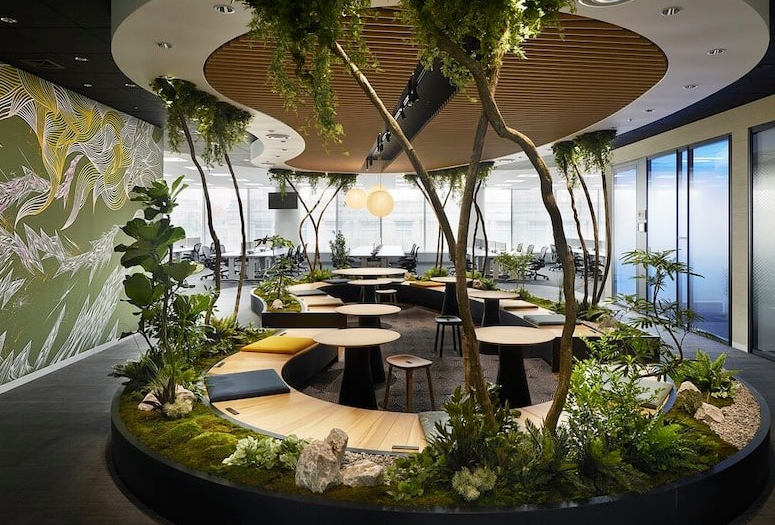
Of course, we have to talk about plants. But in 2026, we don’t just ‘have’ plants; we ‘integrate’ them. Instead of a row of pots on a windowsill, we are building **’Living Furniture.’** Bookshelves where the top shelf is a built-in planter with trailing Pothos that grows down the sides. Kitchen islands with a built-in herb ‘gutter.’
The goal is ‘Immersion.’ You want to be surrounded by the greenery. In a small apartment, use ‘Climbers’—plants like English Ivy or Creeping Fig that can grow up a wall or across a ceiling. It creates a ‘Canopy’ effect that makes a low ceiling feel like the underside of a forest floor. It’s ‘Volumetric Greening.’
A Final Thought for the Urban Dweller
Biophilic design isn’t about ‘decorating’; it’s about ‘healing.’ Your apartment is the ‘External Hard Drive’ of your brain. If it’s filled with nature, your brain will be calmer, more creative, and more resilient. You don’t need a huge budget. You just need to stop thinking about ‘square feet’ and start thinking about ‘biological needs.’ Start with one plant, one piece of wood, and one open window. How does your space feel today? Does it breathe with you, or is it just holding you? It might be time to let the outside in.