How to Choose the Right Rug Size: Anchoring Your Living Room
Choosing a rug is one of the most stressful parts of interior design, second only to picking a paint color. Get it right, and the room feels cohesive, warm, and intentional. Get it wrong, and even the most beautiful furniture can look awkward and disconnected. The most common mistake isn’t picking the wrong color or pattern—it’s picking a rug that is too small. A tiny rug makes a room look ‘staccato,’ like the furniture is floating in space without a plan. In 2026, the trend has shifted toward ‘maximalist comfort,’ where larger rugs are used to create ‘rooms within rooms.’ Here is how to measure and select a rug that truly anchors your living space.
The ‘Front Legs’ Rule for Visual Unity
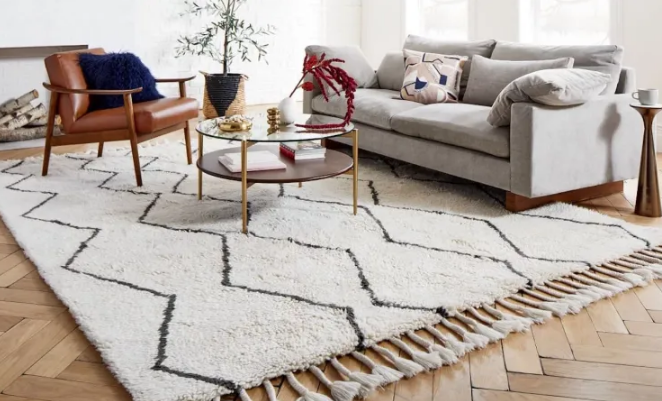
If you only remember one rule of rug placement, let it be this: at least the front legs of all your primary seating should be on the rug. Ideally, the rug should extend 12 to 18 inches beyond the sides of your sofa. This creates a visual ‘island’ that brings the conversation area together. When the rug stops just short of the furniture, it creates a ‘visual gap’ that the eye perceives as unfinished. By placing the legs on the rug, you physically and visually connect the pieces, making the room feel larger and more grounded. It’s the difference between a collection of chairs and a designated ‘living area.’
Finding the Right Border of Bare Floor
While you want the rug to be large, you don’t want it to be a wall-to-wall carpet. A general rule of thumb is to leave about 12 to 18 inches of bare floor between the edge of the rug and the walls of the room. In smaller apartments, you can go as low as 8 inches, but the goal is to see a ‘frame’ of your original flooring. This contrast highlights the rug as a design choice rather than a floor covering. If the rug is too close to the wall, it can make the room feel cramped; too far, and it looks like a lonely postage stamp. That ‘breathing room’ is what gives a room its professional, designed feel.
The 70% Rule for Seating Areas
If you are struggling with the math, try the ‘70% Rule.’ Your rug should cover approximately 70% of the visible floor space in your designated seating area. This ensures that when people sit down, their feet are always on the rug, which adds to the tactile comfort of the space. For a standard living room with a three-seater sofa and two armchairs, you are almost always looking for an 8×10 or a 9×12 rug. Anything smaller, like a 5×7, is usually better suited for a bedroom or a small entryway. When in doubt, always size up—a slightly too-large rug is much easier to design around than one that is too small.
Using ‘Rug Layering’ to Solve Size Issues
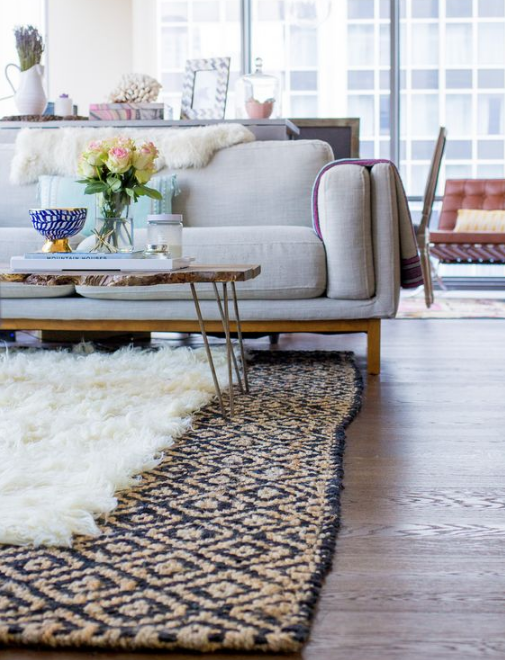
What if you’ve fallen in love with a rug that is just too small for your space, or your budget won’t allow for a giant silk rug? The 2026 solution is ‘layering.’ Buy a large, affordable, neutral-toned rug—like a jute or sisal—to serve as the foundation that meets all the size rules mentioned above. Then, place your smaller, more decorative rug on top, centered under the coffee table. This gives you the ‘best of both worlds’: the proper scale and anchor for the room, but with the personality and pattern of the smaller rug you love. It’s a designer-approved hack that adds texture and depth to the room while saving your budget.
Conclusion: Measuring Twice, Buying Once
A rug is the foundation of your room’s ‘soul.’ It dictates the comfort, the acoustics, and the visual flow of the space. Before you hit ‘buy’ online, use blue painter’s tape to mark out the dimensions on your floor. Walk around the space for a day and see how the ‘tape rug’ feels underfoot. Does it catch your stride? Does it make the sofa look important? Taking that extra step ensures that when your rug arrives, it’s a celebration, not a return-shipping headache. Your living room deserves a solid foundation—why not give it one that fits? Would you like me to suggest some trending color palettes for your new rug?