The 2026 Sanctuary: Where East Meets North
By early 2026, the world has moved past the ‘Clutter-Core’ and ‘Minimalist-Chic’ extremes. We are seeking a middle ground—a style that feels clean but warm, organized but organic. This is **Japandi.** It is the 2026 evolution of two distinct philosophies: the Japanese **Wabi-Sabi** (finding beauty in imperfection) and the Scandinavian **Hygge** (the pursuit of cozy contentment).
Japandi in 2026 isn’t just a look; it’s a ‘Vibe Management’ strategy for the modern home. It is about creating a ‘Zen Retreat’ that can handle the mess of real life. Here is how to achieve the perfect balance in your space.
1. The Palette of ‘Earth and Mist’
The 2026 Japandi color palette has evolved from ‘Strict Beige’ to what designers call **’Earthy Neutrals.’** We are seeing a move toward ‘Warm Whites,’ ‘Soft Teracotta,’ and ‘Muted Sage.’
The Japanese influence brings in **Deep Charcoals and Indigo** as grounding accents, while the Scandinavian side keeps things light with **Ash and Birch** wood tones. The key is to avoid ‘High Contrast.’ You want the colors to ‘bleed’ into one another, creating a visual ‘Soft-Focus’ effect. In 2026, we also recommend using **Limewash Paint** to add a subtle, chalky texture to the walls, which perfectly embodies the Wabi-Sabi principle of ‘Tactile Depth.’
2. Furniture: ‘Low-Profile and High-Function’
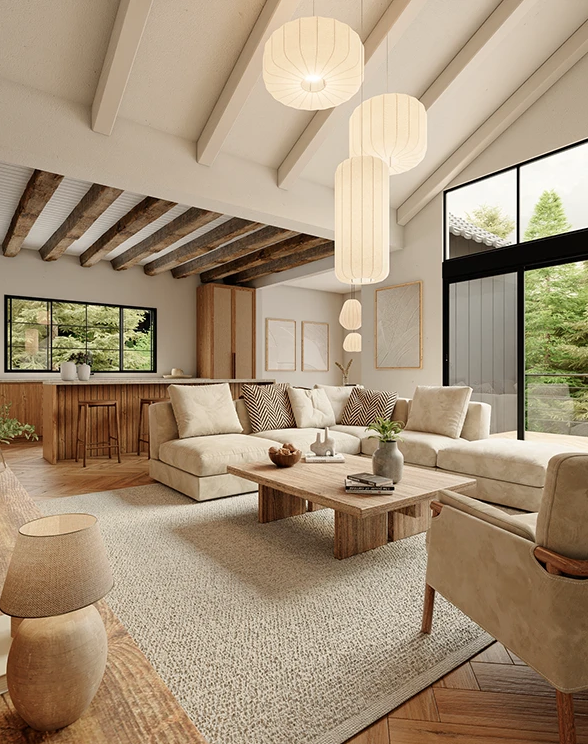
Japandi furniture in 2026 is defined by its **Z-Axis.** Japanese design favors ‘Floor-Level Living,’ while Scandinavian design favors ‘Leggy’ functionality. The 2026 balance is found in **’Low-Slung Tailoring.’**
Think of a modular sofa with a heavy, solid oak base but slim, tapered legs. This creates a sense of ‘Airliness’ while keeping the room’s ‘Center of Gravity’ low, which is proven to lower heart rates and promote relaxation. In 2026, we are also seeing the rise of **’Slatted Wood’ Architecture**—using vertical wooden slats for room dividers or cabinet doors. This allows light and air to ‘flow’ through the furniture, preventing a small room from feeling ‘heavy.’
3. The ‘Natural Material’ Manifesto
In 2026, ‘Sustainability’ is the foundation of Japandi. We avoid plastics and synthetic fibers. The 2026 ‘Material Mix’ includes:
– **Unfinished Oak and Bamboo:** For a raw, organic feel.
– **Linen and Hemp Textiles:** For curtains and upholstery that ‘breath’ and age beautifully.
– **Stone and Clay:** For lighting fixtures and decorative bowls.
The ‘Wabi-Sabi’ element comes from the **’Living Finish.’** In 2026, we don’t want our coffee table to look brand new forever. We want the ‘Patina’—the small scratches and the darkening of the wood that tells the story of our lives. This makes the home feel ‘Soulful’ rather than like a museum showroom.
4. ‘Mindful Clutter’ and Integrated Storage
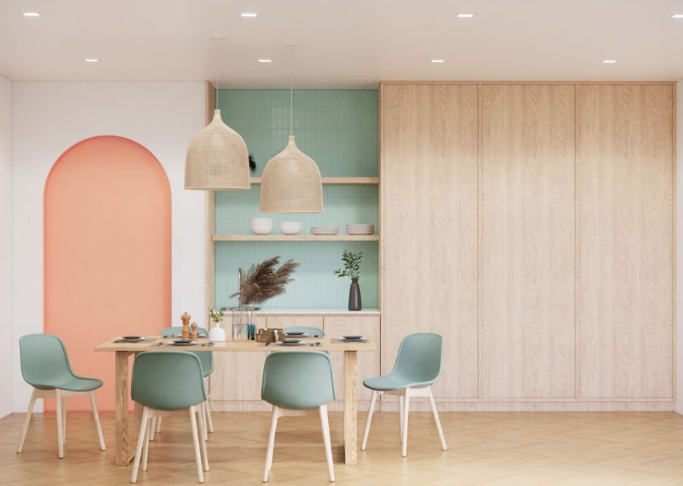
Japandi is not ‘Anti-Object’; it is **’Pro-Intentionality.’** In 2026, we use **’Hidden Architecture’** for our clutter. This means built-in cabinetry that blends seamlessly into the walls, or ‘Tamba’ (sliding) doors on shelving units.
However, we leave ‘Breathable Space’ for a few **’Hero Objects.’** This might be a single, oversized ceramic vase with a ‘Dry Floral’ arrangement, or a piece of textured abstract art. In 2026, we also integrate **’Biophilic Elements’**—low-maintenance indoor trees like the ‘Ficus Audrey’ or ‘Olive Trees’ in large stone planters. The green of the leaves provides the only ‘Pop’ of color needed, connecting the indoor sanctuary to the outdoor world.
Summary: A Home for the Soul
Japandi in 2026 is the ultimate answer to our chaotic, digital lives. It provides the ‘Structural Discipline’ of Japan with the ‘Emotional Warmth’ of Scandinavia. By focusing on natural materials, a low-profile silhouette, and a muted palette, you can transform your home into a space that doesn’t just look good on camera, but *feels* good to inhabit. It’s not about perfection; it’s about balance.