Modern Parenting 2026: The New Rules of Screen Time
I was at the park yesterday, and I saw something that would have been unthinkable five years ago. A group of seven-year-olds were sitting in a circle, and not a single one had a phone or a tablet. They were playing a complex, imaginative game involving sticks and a cardboard box. Ten feet away, their parents were also… not on their phones. They were talking to each other.
In 2026, we are in the middle of the ‘Great Unplugging.’ After the ‘Tablet-Parenting’ era of the early 2020s, we’ve seen the data. We’ve seen the impact on attention spans, social anxiety, and sleep. And as parents in 2026, we’ve collectively decided that ‘Digital Minimalism’ is the new status symbol. But we also live in a world where tech is mandatory. So how do we balance it? How do we manage screen time without becoming luddites or drill sergeants?
The Shift from ‘Passive’ to ‘Active’ Screens
In 2026, the conversation isn’t about ‘minutes’; it’s about ‘intent.’ We’ve realized that 30 minutes of watching ‘mindless brain-rot’ videos is infinitely worse than two hours of a child using a 3D-modeling app to design a toy they want to 3D print.
The new rule of 2026 is: **No Passive Consumption on School Nights.**
If the screen is a ‘window’ to learning, creating, or communicating with family, it’s encouraged. If the screen is a ‘pacifier’ used to kill boredom, it’s restricted. We are teaching our kids that boredom is a ‘Creative Catalyst.’ When a kid is bored, their brain eventually starts to innovate. If we fill every ‘boring’ second with a screen, we kill that innovation before it can even start.

The ‘High-Friction’ Device Strategy
One of the best parenting hacks of 2026 is the ‘High-Friction’ setup. In 2024, devices were designed to be ‘frictionless’—easy to unlock, easy to use, easy to get addicted to. In 2026, we are intentionally adding friction back in.
This means no tablets or phones in bedrooms. Ever. All charging happens in a central ‘Tech Garage’ in the kitchen. If a child wants to use a device, they have to ask, retrieve it, and use it in a public space. By physically separating the device from their private ‘rest’ space, we break the ‘infinite scroll’ loop. We’ve also seen a rise in ‘Single-Purpose’ devices. E-ink readers for books, digital cameras for photos, and MP3 players for music. By de-bundling the ‘everything-app’ (the smartphone), we allow kids to enjoy the benefits of tech without the ‘dark patterns’ of social media apps.
The AI Mentor: A New Kind of Companion
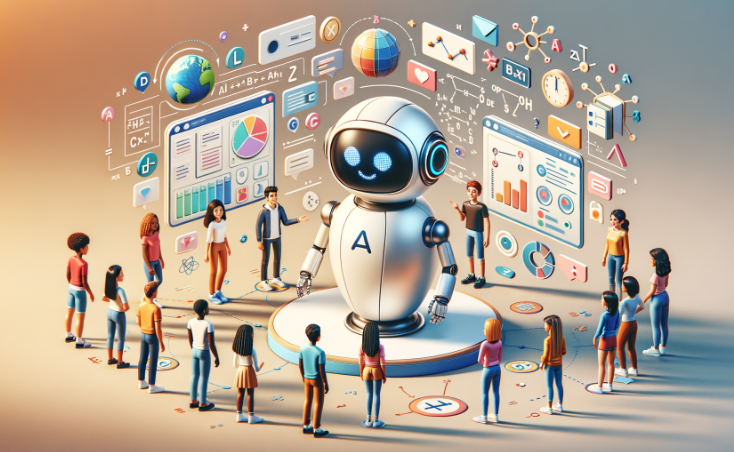
Now, it’s not all ‘restriction.’ 2026 has brought us a powerful ally: the **Personalized AI Tutor**. These aren’t just chatbots; they are ‘Socratic Mentors.’
When my kid wants to play a game, the AI might say: ‘Sure, we can play Minecraft, but first, let’s spend fifteen minutes working on that Spanish dialogue we practiced yesterday.’ The AI understands the child’s curriculum, their interests, and their frustration levels. It makes screen time feel like a partnership rather than a battle. It gamifies the ‘hard work’ so that by the time they get to their ‘fun’ screen time, they’ve actually accomplished something. It’s the ‘Vegetables-before-Dessert’ model, but automated and customized for their specific brain.
Modeling the Behavior: The Parent’s ‘Black Mirror’
Here’s the hardest part of 2026 parenting: we can’t tell our kids to put their phones down if we are clutching ours like a lifeline. ‘Digital Modeling’ is the most important part of the 2026 parenting toolkit.
We have ‘Phone-Free Zones’ in the house—usually the dining table and the living room. We use ‘Analog Sundays’ where the whole family leaves their devices at home and goes for a hike or a museum visit. We show our kids that the world is more interesting than the screen. If they see us reading a physical book, they are more likely to pick one up. If they see us struggling with a map instead of a GPS, they learn spatial awareness. We are the ‘Primary OS’ our children are running on. If our software is buggy and addicted, theirs will be too.
The Long Game: Digital Literacy over Digital Restriction
Ultimately, 2026 is about teaching ‘Digital Literacy.’ We want our kids to understand *how* these apps are designed to trick them. We talk to them about ‘Dopamine Loops’ and ‘Algorithmic Bias’ like we talk about nutrition or road safety.
We don’t want to raise kids who are ‘protected’ from the internet; we want to raise kids who are ‘immune’ to its worst parts. By giving them the tools to understand the tech, we empower them to use it as a tool rather than being used *by* it. It’s a marathon, not a sprint. And some days, we fail. Some days, we all just want to sit on the couch and scroll. And in 2026, that’s okay too—as long as we talk about it. How are you handling the ‘Digital Balance’ in your house this week?