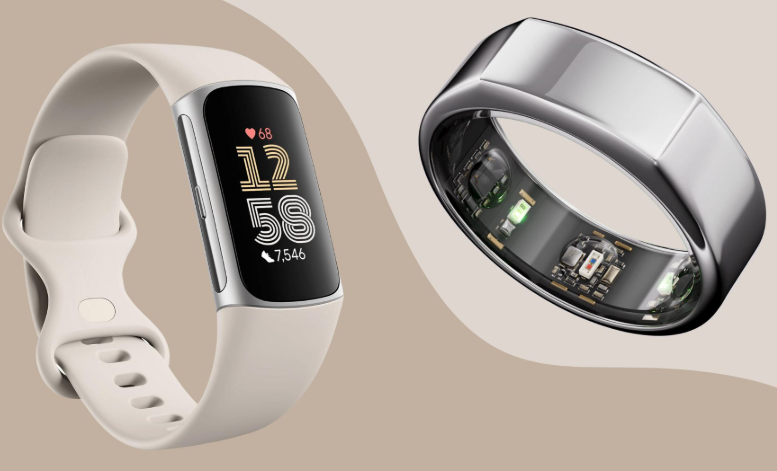
The wrist is getting crowded
I’ve been wearing a smart watch since the first Pebble. I’ve seen them go from ‘nerdy calculator’ to ‘essential medical device.’ But lately, I’ve found myself leaving my watch on the charger for days. Why? Because the Smart Ring has finally grown up.
In 2026, we’ve reached a fork in the road. You’re either a ‘Wrist Person’ or a ‘Ring Person.’ You can’t really be both without looking like you’re on house arrest.
The ‘Ring’ Philosophy: Invisible Intelligence
The appeal of the smart ring (like the Oura Gen 5 or the new Samsung Ring) is what I call ‘Invisible Tech.’ It’s for the person who is tired of the screen. We are all burnt out on notifications. We don’t want another glass rectangle buzzing when we get a spam email.
A ring is passive. It sits there, it looks like jewelry, and it quietly collects the most accurate sleep and recovery data I’ve ever seen. Because the sensors are on the inside of your finger, they have constant contact with the skin. No light leakage, no shifting during the night. If you care about HRV (Heart Rate Variability) and sleep stages, the ring is the king. Period.
The ‘Watch’ Philosophy: The Command Center
But then you have the Apple Watch Ultra 3 or the Garmin Fenix 8. These aren’t just trackers; they are survival tools. If you’re a runner, a ring is useless. You can’t glance at your finger to see your split times or your GPS map while you’re sprinting through a trail.
The watch in 2026 has become a standalone device. With the death of most mid-range smartphones, the watch is now the primary way people pay for coffee, unlock their cars, and even take quick calls. It’s the command center. But it comes with a price: ‘Notification Anxiety.’ Even if you turn them off, the presence of that screen on your wrist is a constant psychological ‘pull’ back into the digital world.
The Battery War
This is where the ring usually wins. In 2026, most rings last 8 to 10 days on a single charge. You forget you’re even wearing it. The watches? Even the high-end ones struggle to get past 3 or 4 days if you’re using the always-on display and GPS. There is a specific kind of ‘low-level stress’ that comes with having yet another device that might die before the end of the day. The ring removes that.
The ‘Insider’ Secret: Accuracy vs. Utility
Here is what the reviewers won’t tell you: Smart rings are terrible at tracking ‘active’ heart rate during weightlifting. When you grip a barbell, the sensors get compressed and the data goes haywire. If your primary goal is tracking your gym sessions, the ring will frustrate you. It’s a recovery tool, not a workout tool.
On the flip side, watches are terrible at tracking sleep for many people because they are bulky. I’ve woken up with scratches on my face from my watch. It’s not ‘seamless.’
So, which one should you buy?
In 2026, the trend is shifting toward ‘Minimalism.’ People who want to be more present in their lives are moving to rings. They want the data, but they don’t want the distraction. The athletes and the ‘power users’ are sticking with watches.
But here is my prediction: by 2027, the technology will miniaturize so much that we’ll see ‘Smart Skin’ patches. Until then, if you want to sleep better and worry less, get the ring. If you want to leave your phone at home and still be a functioning member of society, get the watch. Just don’t buy the cheap knock-offs—in 2026, the software (the AI that interprets your data) is more important than the hardware. A ring that gives you raw data without telling you what it *means* is just a piece of heavy jewelry.