The ‘Leash-Stress’ Paradox
Most new puppy owners think leash training is about ‘control.’ They think if they pull hard enough, the puppy will eventually understand where to go. But in 2026, modern canine behaviorists have flipped the script. Leash training isn’t about ‘walking’; it’s about **’Engagement.’**
If your puppy is looking at everything *but* you, you’ve already lost the battle. A successful walk in 2026 is a conversation between you and your dog. Here is the step-by-step ‘Positive Reinforcement’ blueprint to raising a calm, loose-leash walker.
Phase 1: The ‘Indoor Foundation’ (Weeks 8-12)
The biggest mistake is starting outside. The world is too exciting—there are squirrels, smells, and cars. In 2026, we start **Indoors**.
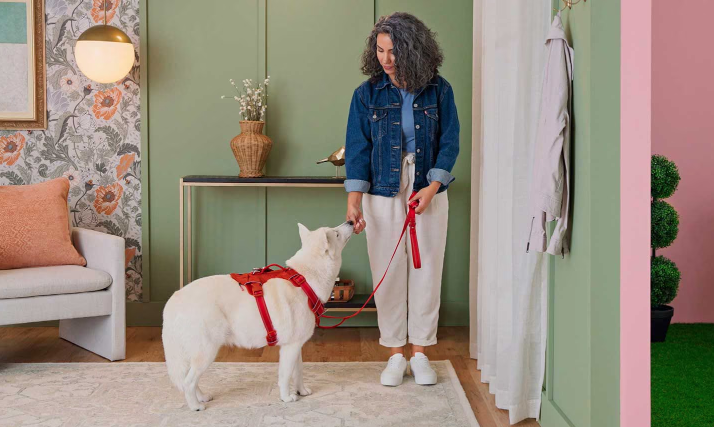
Put the harness and leash on your puppy in your living room and just let them drag it around while they eat or play. This removes the ‘scary’ factor of the equipment. Once they ignore the leash, start the **’Follow Me’ Game**. Walk around your kitchen with high-value treats (think boiled chicken or freeze-dried liver). Every time the puppy naturally walks near your left leg, click or say ‘Yes!’ and give a treat. You are building ‘Value’ in the heel position before you even step foot on the pavement.
Phase 2: The ‘Red Light, Green Light’ Method
Once you move outside, the rule is simple: **A tight leash means the world stops.**
If the puppy pulls forward to sniff a leaf, you become a statue. Do not pull back (this triggers their ‘Opposition Reflex’ and makes them pull harder). Just wait. The moment the puppy looks back at you or the leash goes slack, the ‘Green Light’ turns on and you move forward again. In 2026, we teach puppies that *they* are the ones who control the movement. If they want to get to that tree, they have to keep the leash loose to get there. It’s a ‘Choice-Based’ system that builds a smarter, more attentive dog.
Phase 3: The ‘Front-Clip’ Advantage
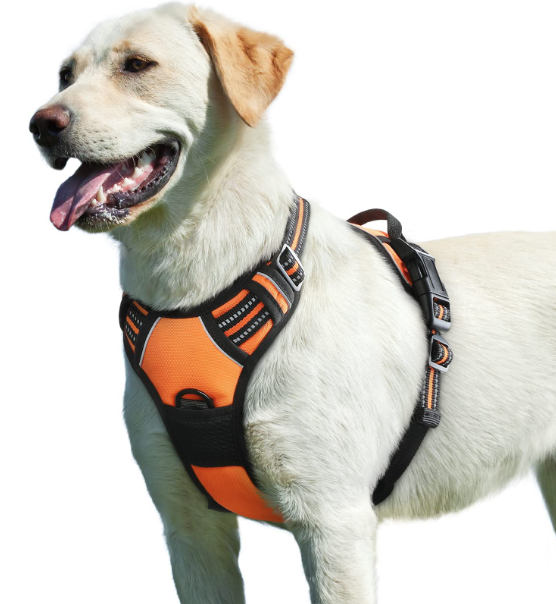
If you have a high-energy breed (like a Goldendoodle or a Shepherd), a standard collar is a recipe for neck injury. In 2026, the **Front-Clip Harness** is the industry standard.
When a puppy pulls in a front-clip harness, the leash tension gently pivots their body back toward you. It’s a mechanical advantage that doesn’t cause pain. It’s like ‘power steering’ for your dog. It allows you to redirect their attention without a physical ‘tug-of-war.’
Phase 4: Managing ‘Trigger Overload’
In 2026, we understand that a ‘stubborn’ puppy is usually just an ‘overwhelmed’ puppy. If your dog starts lunging at other dogs or biting the leash, they are ‘over-threshold.’
The secret is the **’Look at Me’ Command**. Whenever you see a distraction (like a neighbor walking by), call your puppy’s name. When they look at you, treat them repeatedly until the distraction has passed. You are teaching them that ‘Distraction = Look at Owner for a Reward.’ This ‘Counter-Conditioning’ is the key to having a dog you can actually take to a crowded café or a busy park.
Phase 5: The ‘Sniffari’ Balance
A walk shouldn’t be a 100% military march. Dogs experience the world through their noses. In 2026, we advocate for the **80/20 Rule**.
80% of the walk is ‘Structured’ (walking nicely by your side), but 20% should be a **’Sniffari’**. Give a cue like ‘Go Sniff!’ and let them explore for two minutes. This mental stimulation is more tiring for a puppy than a two-mile run. A puppy that gets to sniff is a puppy that is happy to walk nicely for the rest of the block.
Summary: Patience is the 2026 Superpower
Leash training isn’t a linear path. There will be ‘bad’ days where it feels like they’ve forgotten everything. That’s okay. Stay consistent, keep your sessions short (5-10 minutes), and never stop being the most interesting thing in your puppy’s world. By the time they hit adulthood, you won’t just have a dog on a leash; you’ll have a partner.