The Biology of the Bloom: Why We Prune
Pruning roses is often viewed as ‘gardening chores,’ but in 2026, we see it as **Horticultural Engineering.** To get those ‘magazine-cover’ blooms, you need to understand the concept of **’Apical Dominance.’** Roses, like many plants, want to grow from the very top bud. If you leave a rose bush alone, it becomes ‘leggy’—a tangled mess of thin wood with tiny flowers only at the tips.
By pruning, you are ‘interrupting’ this signal, forcing the plant to send its energy (sugars and hormones) to the lower, dormant buds. This results in a bushier plant with a 300% increase in flower production. Here is the 2026 ‘Master Pruner’s’ guide to the perfect cut.
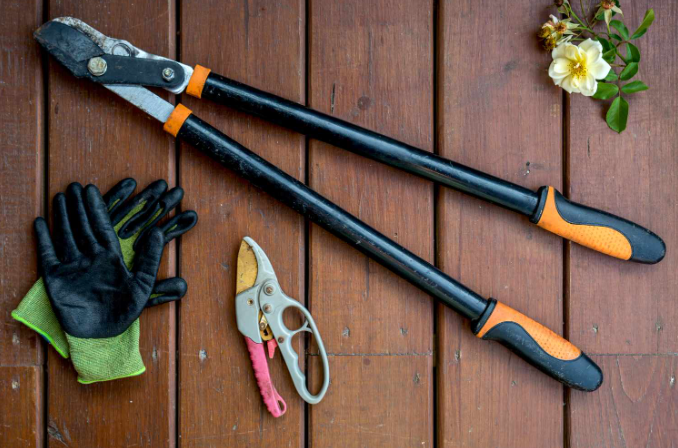
1. The ‘Three-Tool’ Kit
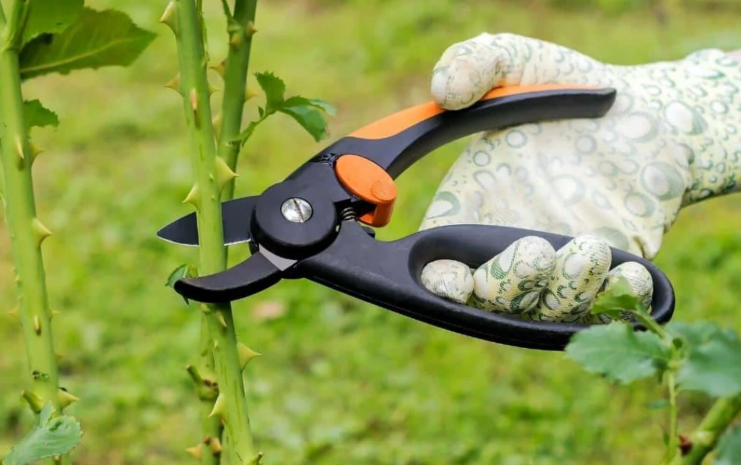
In 2026, we’ve moved away from ‘Anvil’ pruners, which crush the stem. You must use **Bypass Pruners** (where the blades pass each other like scissors). This ensures a clean ‘surgical’ cut that heals in 24 hours.
Your kit should include:
– **Sharp Bypass Pruners** (For stems up to 1/2 inch).
– **Loppers** (For thick, woody base canes).
– **Long-Sleeve Goat-Skin Gloves** (Rose thorns in 2026 are still just as sharp as they were in the 1800s).
2. The Timing: The ‘Forsythia’ Rule
When is the right time to prune? In 2026, we follow the **’Phenological Calendar.’** Don’t look at a date on your phone; look at the plants. The perfect time to prune your roses is when the **Forsythia bushes** in your neighborhood begin to bloom. This indicates that the soil has reached the perfect temperature for the rose to begin its growth cycle. Pruning too early can lead to ‘Frost-Kill’ on the new tender buds; pruning too late wastes the plant’s stored energy.
3. The ‘Open-Center’ Philosophy
The secret to a healthy rose in 2026 is **Airflow.** Fungal diseases like ‘Black Spot’ and ‘Powdery Mildew’ thrive in stagnant, humid air inside a dense bush.
When you prune, aim for an **’Open Vase’ shape.** Remove any canes that are growing toward the center of the bush. You want the middle of the plant to be open so that air can move freely through it and sunlight can reach the interior leaves. If a bird can’t fly through your rose bush without hitting a branch, it’s too dense.
4. The 45-Degree Angle Cut
This is the ‘Technical Core’ of pruning. Always cut at a **$45^{circ}$ angle**, sloping *away* from the bud.
Why? Because of gravity. If it rains, the water will run down the slope and off the stem. If you cut flat, water will sit on top of the wound, inviting rot and ‘Cane Canker.’
**The ‘Outward-Facing Bud’ Rule:** Always make your cut 1/4 inch above an ‘Outward-Facing Bud’ (a small red bump on the stem pointing away from the center). This ensures the new branch grows ‘out,’ maintaining your ‘Open Vase’ shape. If you cut above an inward-facing bud, the branch will grow into the center, creating a tangle.
5. The ‘The Three D’s’ Cleanup
Before you get into the artistic pruning, you must remove **The Three D’s**:
– **Dead:** Anything that is brown, shriveled, or hollow.
– **Damaged:** Stems that have been broken by wind or frost.
– **Diseased:** Any wood with black spots or fuzzy growth.
In 2026, we also add a fourth ‘D’: **’Dandruff’** (Crossing branches). If two branches are rubbing against each other, the friction creates an ‘entry wound’ for pests. Choose the strongest one and remove the other entirely.
Summary: The ‘Five-Cane’ Finish
For a standard Hybrid Tea or Floribunda rose, your goal is to end up with **3 to 5 strong, healthy green canes** about 12 to 18 inches high. It will look ‘drastic’—almost like you’ve killed the plant. But don’t worry. Within three weeks, those dormant buds will explode with new, vigorous growth. By June, you’ll have a flush of roses so thick you won’t be able to see the leaves. Pruning is an act of ‘Tough Love’ that the plant will thank you for all summer long.