Furniture Upcycling 2026: Beyond the ‘Chalk Paint’ Craze
In 2026, the ‘Shabby Chic’ look has been replaced by ‘High-Gloss Architectural’ and ‘Matte Ceramic’ finishes. As we prioritize sustainability and ‘Circular Home’ aesthetics, refinishing high-quality vintage wood has become a status symbol. However, a ‘2026 Professional’ finish is 90% preparation and 10% application. This 1,200-word guide details the ‘No-Fail’ workflow for prepping various wood types and selecting the latest ‘Ceramic-Infused’ topcoats for a factory-level finish.
The ‘Three-Step’ Prep Protocol
Most DIY failures happen because the paint doesn’t ‘bite’ into the wood. In 2026, we follow the ‘Clean-Scuff-Prime’ protocol.
Stage 1: Deglossing. Instead of just soap and water, use a Liquid Sandpaper (Deglosser). This chemically opens the pores of old varnish without the mess of heavy sanding.
Stage 2: The Sanding Ladder. You cannot jump from 80-grit to 220-grit. Use the ladder approach: 120-grit to remove imperfections, then 180-grit to smooth. In 2026, mesh sanding discs are preferred because they don’t clog and provide a more even surface than traditional paper.
Stage 3: Tack-Cloth Triage. Use a resin-infused tack cloth to remove every microscopic dust particle. If you can see the dust, the paint will highlight it.
Choosing the Right 2026 Primer
In 2026, we’ve moved away from ‘All-in-One’ paint and primer combinations. For a professional result, you need a dedicated bonding layer.
For tannin-rich woods like oak, cherry, or mahogany, you must use a shellac-based primer. If you go with water-based instead, the natural oils will bleed through your paint within weeks, leaving yellow stains.
For laminate or IKEA furniture, use a high-adhesion bonding primer. These are specifically designed to stick to non-porous surfaces like glass or plastic.
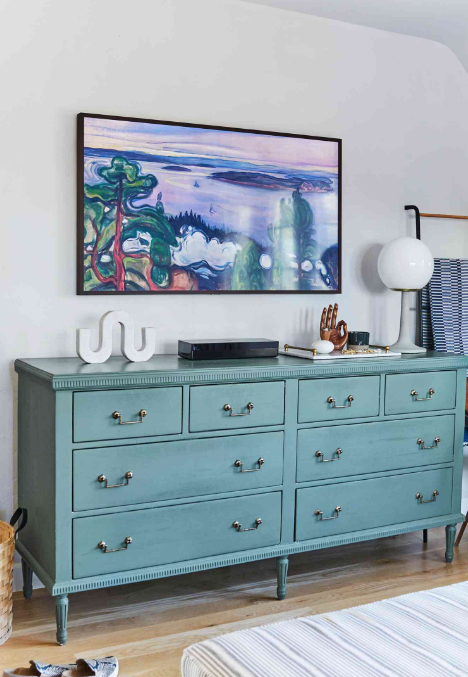
Application: The ‘Flow and Level’ Technique
The 2026 aesthetic is clean and brush-free. To achieve this without a professional sprayer, use a high-density foam roller and a synthetic filament brush for the corners.
The ‘Lay-Off’ secret: once you roll the paint onto a section, immediately take a dry brush and lightly stroke the wet paint in one direction. This breaks the slight texture left by the roller and allows the paint to self-level as it dries.
The Protective Finish: Ceramic vs. Polyurethane
In 2026, ceramic-infused topcoats have become the industry standard for high-traffic pieces like dining tables.
Ceramic finishes offer a hard shell that is highly scratch-resistant and can handle heat up to 100°C. They are especially suitable for kitchen cabinets.
Water-based polyurethane is still a strong choice for items like dressers. Modern formulas dry completely clear without yellowing and can fully cure in about 48 hours, much faster than older oil-based versions.
Summary: The Artisan’s Patience
Painting furniture in 2026 is all about patience and precision. If you rush drying times between coats, you risk adhesion failure. Stick to a 12-hour wait window, apply the lay-off technique carefully, and even a 1970s thrift-store piece can end up looking like a modern designer item.