The 2026 Behavioral Shift: Scratching Is a Need, Not a Sin
Many cat owners feel frustrated when they come home and find scratched furniture, damaged curtains, or claw marks on door frames. It can feel like your cat is intentionally destroying your home, but that usually isn’t the case. In 2026, more pet experts are helping owners understand that scratching is a completely normal behavior. Cats scratch to stretch their muscles, maintain their claws, mark territory, and release energy. It’s an instinctive behavior that won’t disappear simply because you tell them to stop.
The real solution is learning how to redirect that behavior instead of punishing your cat. When owners understand why scratching happens, it becomes much easier to protect furniture while still giving cats healthy outlets for their natural instincts.
Why Your Scratching Post May Not Be Working
One of the biggest mistakes cat owners make is buying scratching posts that are too small or unstable. Many cats ignore cheap scratching posts because they don’t allow them to fully stretch their bodies. If the post wobbles, tips over, or feels too short, your cat may choose your couch instead.
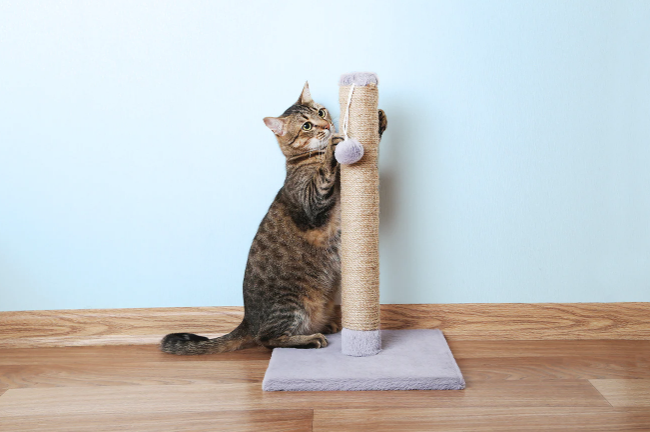
A good scratching post should be tall enough for your cat to fully extend their body while scratching. It should also feel sturdy enough that it won’t move when they use it. Material matters too. Many cats prefer sisal because it gives them a rough texture that feels satisfying under their claws. Others may enjoy cardboard or natural wood surfaces.
Before buying a new scratching post, pay attention to your cat’s scratching style. Some cats prefer vertical surfaces, while others enjoy scratching flat cardboard pads placed on the floor.
Use Deterrents Carefully
If your cat keeps returning to the same furniture, safe deterrents can help break the habit.
Some owners use furniture-safe sprays with scents that cats dislike. Others place double-sided tape on common scratching areas because cats often dislike sticky textures on their paws.
A few common deterrent options include:
- citrus sprays
- double-sided tape
- furniture covers
These tools work best when paired with a better scratching alternative nearby.
Reward the Right Behavior
Many owners focus so much on stopping bad behavior that they forget to reward good behavior.
When your cat uses their scratching post, reward them immediately with praise, treats, or playtime. This helps them build a positive association with the new scratching surface.
A simple training approach works well:
- Place the scratching post near the damaged furniture
- Encourage your cat to explore it with treats or catnip
- Reward them when they use it consistently
Once your cat starts using the post regularly, you can slowly move it to a more convenient location.
Nail Caps as an Alternative
Some cat owners with expensive furniture choose soft nail caps as an additional solution. These covers are placed over your cat’s claws and help reduce furniture damage without removing their claws.
They are often used as a temporary solution while training better scratching habits.
However, they may not work for every cat, and some cats dislike wearing them.
Don’t Punish Your Cat
Yelling, spraying water, or physically punishing a cat often makes the situation worse. Cats usually don’t understand punishment the way people expect them to. Instead, punishment can create stress, anxiety, and even more unwanted behavior.
Redirecting their instincts is usually far more effective than trying to stop the behavior completely.
Final Thoughts: The ‘Scratch-Free’ Harmony
Scratching is a normal and necessary part of feline behavior. Your cat isn’t trying to ruin your furniture—they’re simply acting on natural instincts.
By providing better scratching surfaces, using safe deterrents, and rewarding positive behavior, you can protect your home without creating stress for your pet.
With a little patience, both you and your cat can live much more comfortably.