The ‘Soft-Industrial’ Evolution of 2026
The 2026 take on industrial style has moved far beyond the cold, warehouse-inspired look that dominated the 2010s. Today, the aesthetic has evolved into what designers call ‘Warm Industrial’—a more livable, layered approach that blends raw architectural elements with comfort, texture, and natural life. It’s no longer about mimicking a factory; it’s about creating a home that feels grounded, tactile, and intentionally designed. Think of it as the intersection of grit and grace, where exposed materials meet softness and warmth.
At its core, this style is about balance. Too much steel and concrete can feel sterile, while too many soft elements can dilute the industrial identity. The goal in 2026 is to create contrast that feels curated, not accidental.
The Foundation: Exposed Brick and Concrete
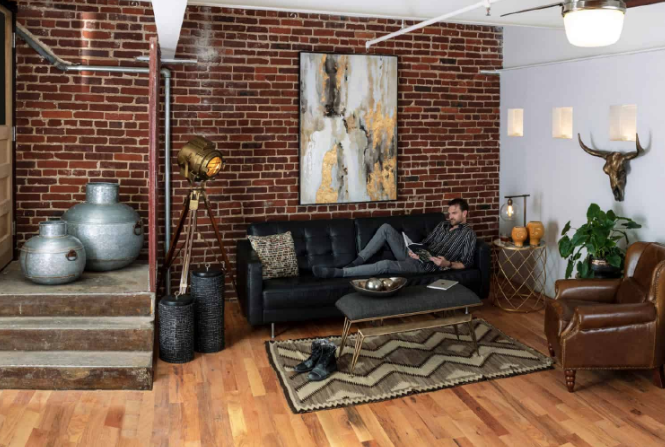
The foundation of any soft-industrial space starts with its architectural surfaces. If you’re lucky enough to have original brick walls, the modern approach is to let them breathe. Instead of painting over them, which was popular a few years ago, a matte clear-coat is now preferred. This keeps dust under control while preserving the natural variation in color—those deep reds, burnt oranges, and subtle imperfections that give the wall its character.
For homes without brick, 2026 offers smart alternatives. Micro-cement and lime-wash finishes are leading the trend, especially for accent walls. These materials create a similar raw, urban texture but feel lighter and more refined. The beauty of micro-cement is its seamless application—it gives you that industrial edge without visible joints or heavy construction.
Another growing detail is the use of imperfect finishes. Slight tonal variations, hand-applied textures, and even subtle cracks are now seen as design features rather than flaws. This adds authenticity and prevents the space from feeling overly polished.
Metal Accents: Beyond the ‘Pipe Shelf’
Industrial design will always include metal, but in 2026, the approach is more refined. Bulky pipe shelving has been replaced with slender-profile black steel that feels architectural rather than decorative.
One standout feature is the use of grid-style partitions, often inspired by Crittall windows. These black-framed glass dividers allow you to separate spaces like a living room and dining area without blocking light. They maintain that open-loft feel while adding structure and a sense of intentional layout.
Hardware has also become a focal point. Knurled finishes—those subtle cross-hatch textures you’ll see on cabinet handles, faucets, and lighting—add a tactile, almost industrial-luxury detail. It’s a small upgrade, but it makes a noticeable difference in how “finished” the space feels.
Even smaller elements like table legs, shelving brackets, and light fixtures are now slimmer and more precise. The idea is to highlight craftsmanship instead of overwhelming the room.
Softening the ‘Grit’
Without balance, industrial interiors can feel harsh. That’s why layering soft elements is essential in 2026. This is where the space becomes truly livable.
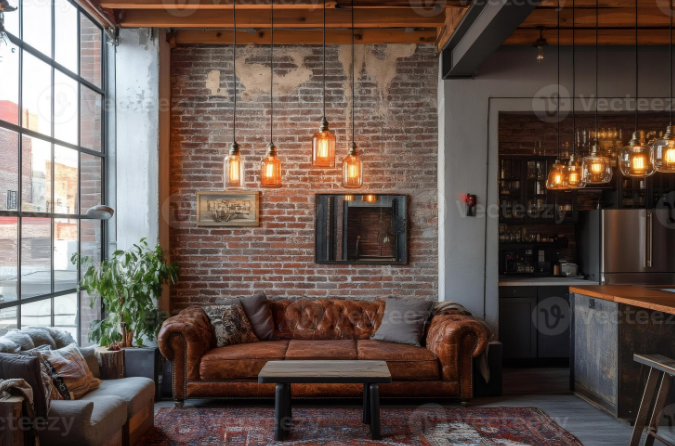
Start with seating. Oversized leather sofas, especially in aniline leather, are a staple. Shades like cognac and tobacco bring warmth and develop a natural patina over time, which actually enhances the aesthetic rather than wearing it down.
Underfoot, natural fiber rugs like jute or sisal help ground the space. Their organic texture contrasts beautifully with metal and concrete, while also improving acoustics. In larger spaces, modular rugs are becoming popular, allowing you to customize layouts without losing cohesion.
Textiles are also key. Think heavy linen curtains, boucle throws, or even soft wool cushions. These additions absorb sound and visually break up harder surfaces, making the room feel calmer and more inviting.
Greenery plays a major role as well. Large plants in concrete or stone planters introduce a biophilic element that softens the entire room. Monstera, rubber plants, and fiddle leaf figs are especially popular because of their bold shapes, which hold their own against industrial backdrops.
Lighting: The ‘Filament’ Update
Lighting is where the industrial style really comes to life in 2026. Edison bulbs are still part of the look, but they’ve been upgraded with modern technology.
Smoked glass pendants paired with smart LED systems are now the standard. These allow you to shift the color temperature depending on the time of day. During daylight hours, a cooler 4000K light enhances the crisp, industrial feel. In the evening, lowering it to a warm 2000K creates a soft, fire-like glow that highlights the texture of brick and wood.
Layered lighting is also important. Instead of relying on one central fixture, combine pendants, floor lamps, and wall sconces to create depth. This adds both functionality and atmosphere, especially in open-plan spaces.
Summary: The Curated Loft
Industrial style in 2026 is no longer about copying an aesthetic—it’s about interpreting it in a way that feels personal and livable. By combining raw materials like brick and steel with warm textures, natural elements, and thoughtful lighting, you create a space that feels both structured and inviting.
The end result is a home that tells a story. It feels grounded, balanced, and intentional—never cold, never overdone. That’s the essence of soft-industrial design in 2026: a space where edge meets comfort, and where every detail has a purpose.